
Bachelor’s Thesis
My bachelor’s thesis investigates the possible existence and detection of a hypothetical exotic supernucleus, the c-deuteron. This state is theorised as a bound system between a charmed baryon, $\Lambda_{c}^{+}$, and a neutron. Theoretical studies suggest it could offer unique insights into interactions between charmed baryons and nucleons, opening a new window on strong-interaction dynamics in the presence of the charm quark. Although no experimental confirmation exists yet, searches in high-energy collision facilities aim to identify this exotic supernucleus.
You can read the full thesis using the button below:
What was done?
Using the Thermal Fist simulation framework, multiple event samples were generated to study how varying key parameters affects the production of the c-deuteron: freeze-out temperature, freeze-out radius, and charm fugacity. The plots below summarise the observed trends and best-fit parameters.
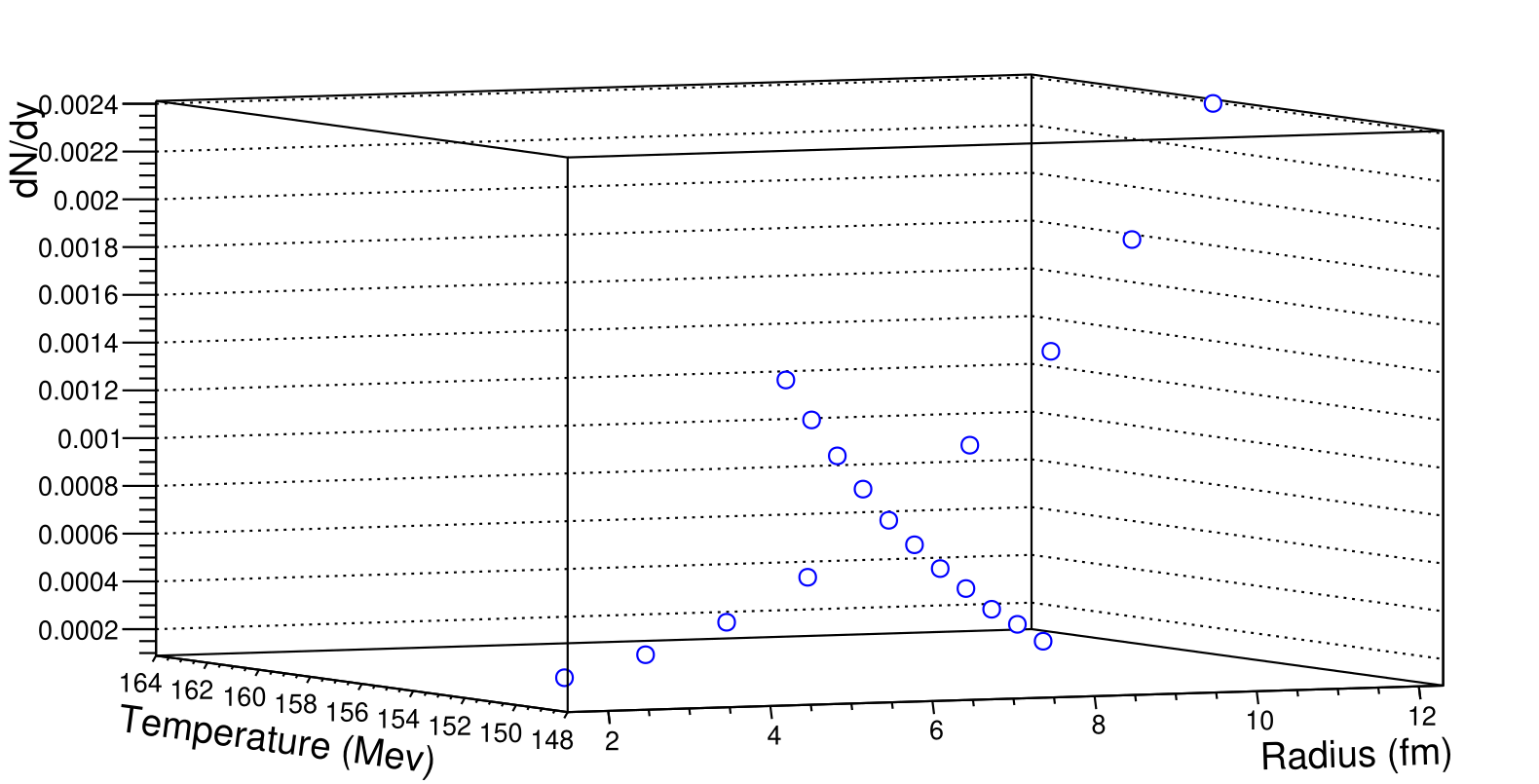
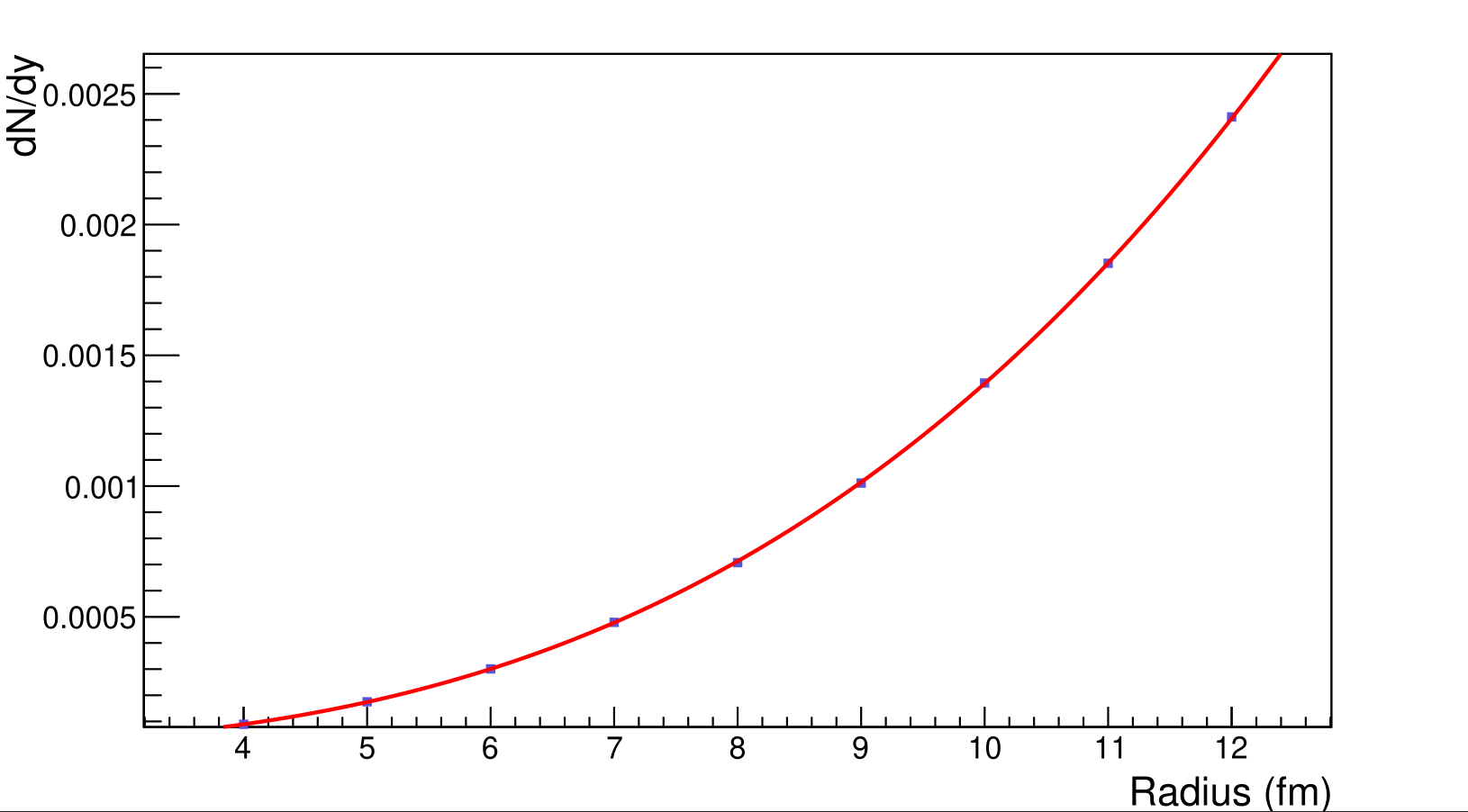
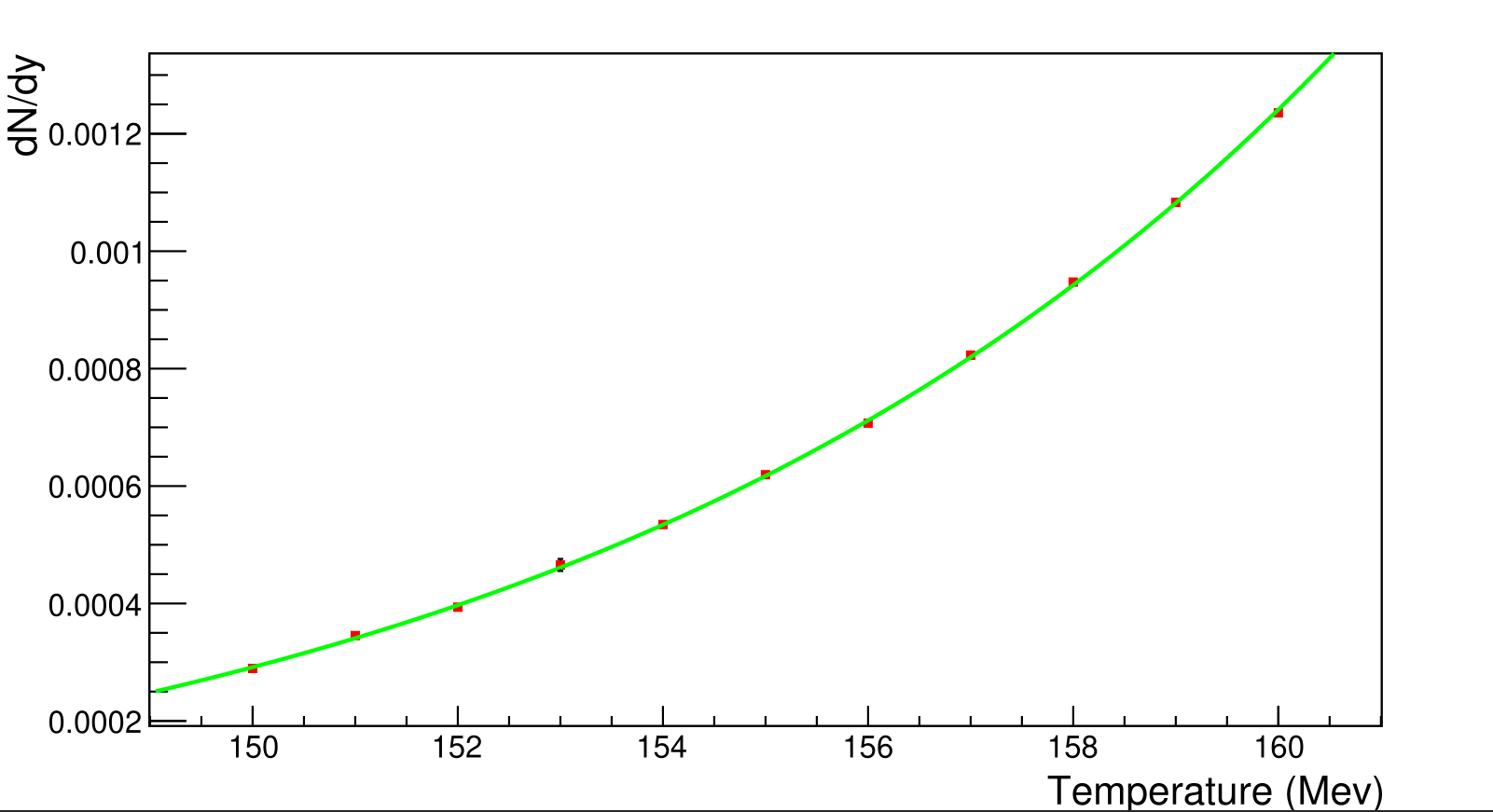
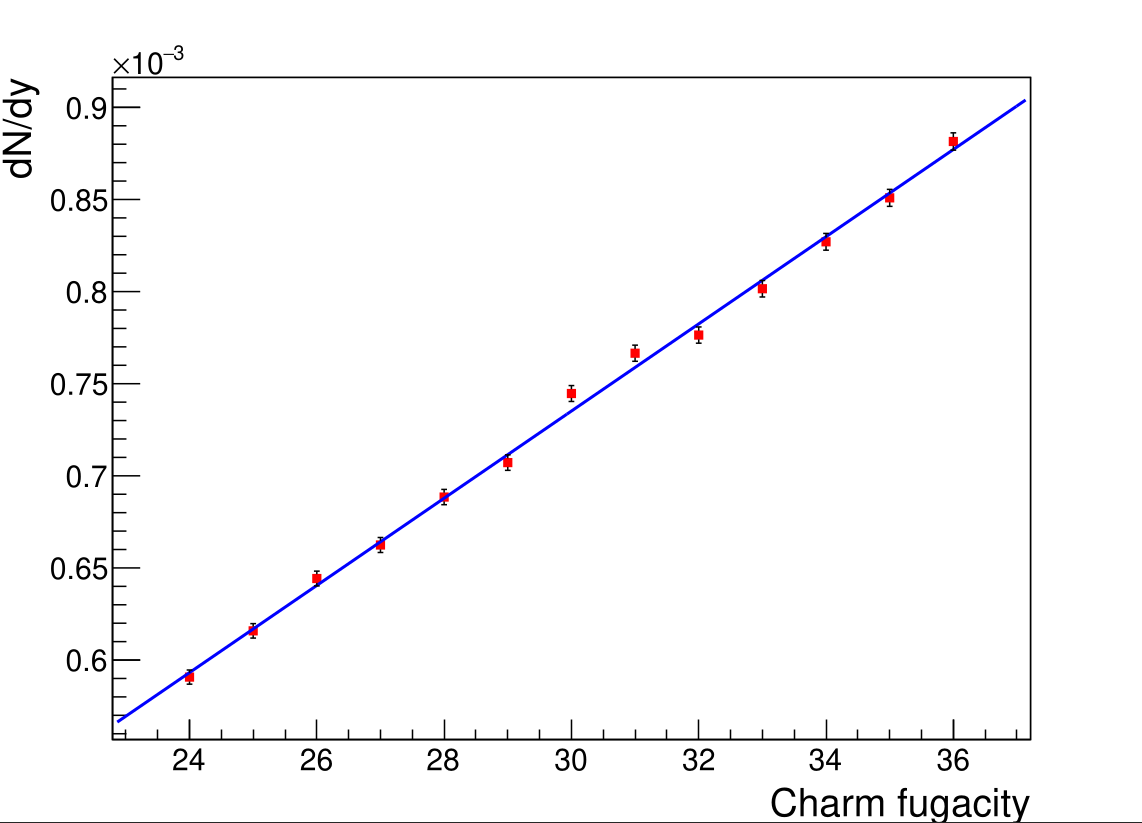
For full details, see the thesis.
The next step focused on detecting secondary deuterons from c-deuteron decay. The transverse-momentum distribution of the c-deuteron was derived from the previous analysis, then events were generated with Pythia 8 so that the $p_T$ spectrum matched the expected one.
Using a Hit-or-Miss approach with ALICE detector specifications, we estimated the fraction of secondary deuterons whose tracks could be correctly reconstructed.
The increase in reconstructed deuterons, under reasonable assumptions, is: \(N_{\text{deut}} = (1938 \pm 12)\ \text{deuterons}\)
Again, all methodological details are in the thesis text.
Explore the code
The analysis code is available on GitHub:
In tesi.C you will find the data analysis and plotting routines; the rilevazioni/ folder (plus the accompanying Pythia files) contains the Monte Carlo implementation used for the reconstruction study.